Red Meat, Western Diets, and Cancer Risk
This handout explains what scientists have learned about the connection between certain foods—especially red and processed meats and "Western-style" eating patterns—and the risk of developing cancer. It is meant for general education. It does not replace advice from your own doctor.
The Short Version
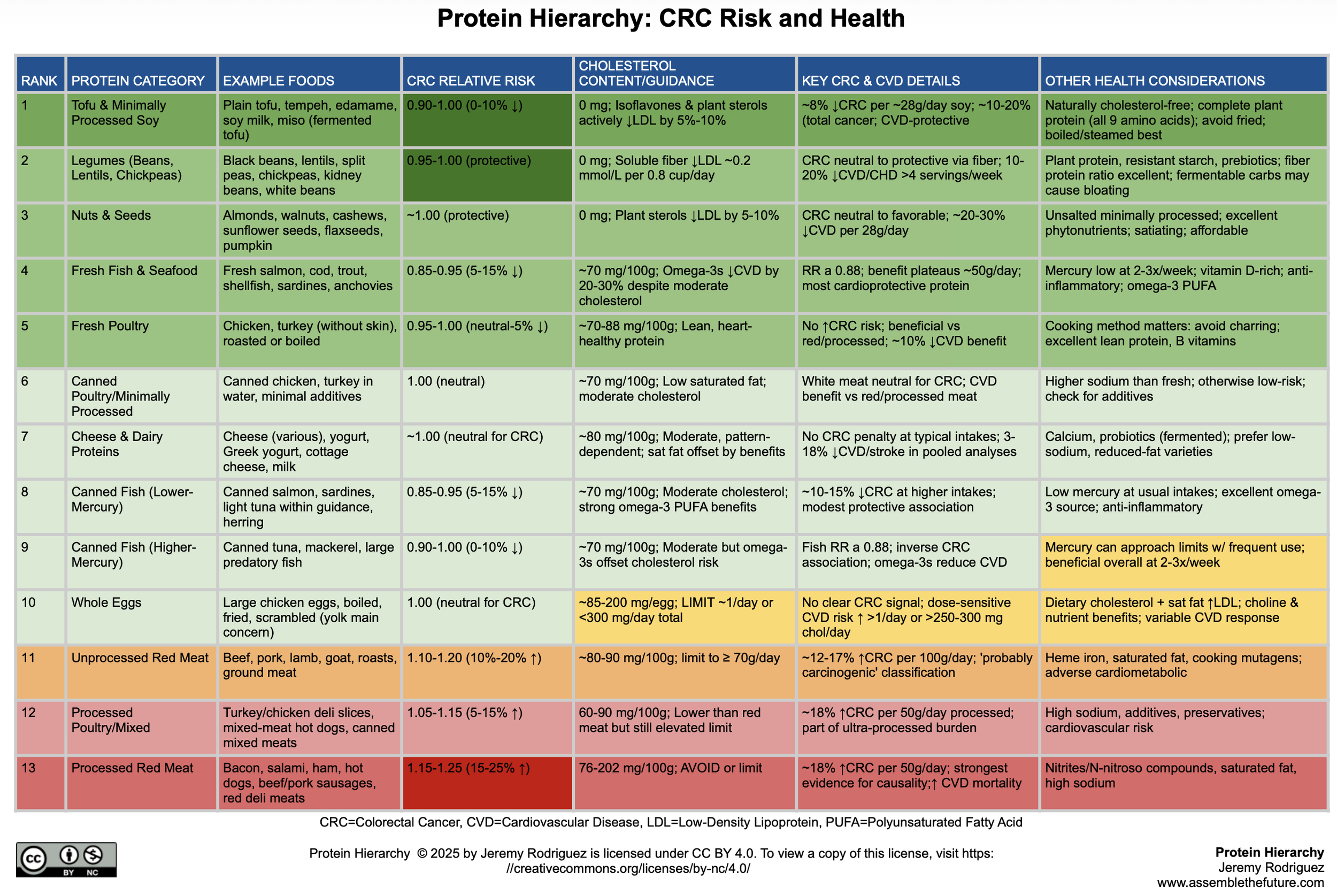
Eating a lot of red meat (beef, pork, lamb) and processed meat (bacon, sausage, hot dogs, deli meats, ham) is linked to a higher risk of some cancers—most strongly colorectal cancer (cancer of the colon and rectum). A "Western diet"—high in red and processed meat, refined grains, added sugar, and sugar-sweetened drinks, and low in fruits and vegetables—is also linked to higher cancer risk.
The World Health Organization's cancer research agency (IARC) classifies processed meat as a known cause of cancer in people and red meat as a probable cause of cancer, based mainly on the evidence for colorectal cancer (IARC/World Health Organization).
Cancers Linked to Red and Processed Meat
The strongest and most consistent link is with colorectal cancer. Large studies show that regularly eating red and processed meat raises the risk, and the risk goes up the more you eat—roughly about 12% higher for each additional 100 grams (about 3.5 ounces) of red meat per day (Vieira et al., Annals of Oncology, 2017; Ungvari et al., GeroScience, 2025).
Other cancers have also been linked to red and/or processed meat in research reviews, though these links are weaker and less certain than the colorectal link:
Breast cancer
Endometrial (uterine) cancer
Lung cancer
Esophagus, stomach, and nasopharynx (upper throat) cancers
Pancreatic cancer
Liver cancer
Kidney cancer
Bladder cancer
Prostate cancer
Non-Hodgkin lymphoma
(Farvid et al., European Journal of Epidemiology, 2021; Huang et al., Food Chemistry, 2021; Poorolajal et al., PLOS One, 2024)
Cancers Linked to a "Western" Eating Pattern
A Western eating pattern means a diet high in red and processed meats, refined grains (white bread, white rice), added sugars and sweets, high-fat dairy, and sugary drinks, and low in fruits and vegetables (Bamia, European Journal of Clinical Nutrition, 2018).
The clearest link is again with colorectal cancer, including a worrying rise in colorectal cancer among younger adults (Steck and Murphy, Nature Reviews Cancer, 2020; Du et al., Nature Reviews Endocrinology, 2025). Research has also suggested links with ovarian, prostate, pancreatic, and breast cancers, but for these the evidence is mixed and less certain (Steck and Murphy, Nature Reviews Cancer, 2020).
Why Might These Foods Raise Risk?
Scientists think several things may play a role, including natural compounds in red meat (such as heme iron), preservatives (nitrates and nitrites) in processed meat, cancer-causing chemicals formed when meat is cooked at high temperatures (grilling, frying, charring), and the effects of a low-fiber, high-sugar diet on inflammation, insulin, and gut bacteria (Song et al., Gastroenterology, 2015).
What You Can Do
The American Cancer Society recommends the following steps to lower your risk (Rock et al., CA: A Cancer Journal for Clinicians, 2020):
Limit red meat and processed meat. There is no proven "safe" amount of processed meat, so the less, the better.
Choose healthier proteins, such as fish, poultry, beans, and lentils.
Fill your plate with vegetables, fruits, and whole grains.
Cut back on sugary drinks, sweets, and heavily processed foods.
Cook gently when possible—stewing, baking, or steaming instead of charring or frying at very high heat.
Important to Remember
Diet is only one of many things that affect cancer risk. Family history, smoking, alcohol, physical activity, body weight, and recommended cancer screenings (such as colonoscopy) all matter too.
Eating red meat does not mean you will get cancer, and avoiding it does not guarantee you will not. These are risks across large groups of people, not certainties for any one person.
Talk with your doctor about your personal risk and about staying up to date on cancer screening.
Protein Hierarchy References
Comprehensive References & Publications: Protein Hierarchy - CRC Risk, Cholesterol & CVD Health
COLORECTAL CANCER RISK - PROCESSED RED MEAT
[1] Cross, A. J・,Leitzmann, M. E, Gail, M. H・,et al. (2007). . A prospective study of red and processed meat intake in relation to cancer risk. PLoS Medicine, 4(12), e325. DOI
[2] International Agency for Research on Cancer (IARC). (2015). . Carcinogenicity of the consumption of red meat and processed meat. WHO Monographs on Carcinogenic Risks to Humans, 114, 1-40. DOI
[3] Lippi, G・,Mattiuzzi, C・,& Cervellin, G. (2016). . Meat consumption and cancer risk: A critical review of published meta-analyses. Critical Reviews in Oncology/Hematology, 97, 1-14. DOI
[4] Schwingshackl, L., Hoffmann, G., Lampousi, A. M., et al. (2017). . Food groups and risk of colorectal cancer. International Journal of Cancer; 142(11), 2191-2205. DOI
COLORECTAL CANCER RISK - UNPROCESSED RED MEAT
[5] Norat, T・,Chan, D・,Lau, R・,et al. (2011). . Red and processed meat and colorectal cancer incidence: Meta-analysis of prospective studies. PLoS ONE, 6(6), e20456. DOI
[6] World Cancer Research Fund (WCRF) & American Institute for Cancer Research (AICR). (2018). . Meat consumption and colorectal cancer risk. Continuous Update Project. DOI
[7] Vieira, A. R・,Abar, L., Chan, D. S. M., et al. (2017). . Foods and beverages and colorectal cancer risk: A systematic review and meta-analysis of cohort studies. Cancer Epidemiology, Biomarkers & Prevention, 26(8), 1248-1258. DOI
COLORECTAL CANCER RISK - FISH & SEAFOOD
[8] Aune, D・,Chan, D. S. M・,Lau, R・,et al. (2018). . Dietary fibre, whole grains, and risk of colorectal cancer: Systematic review and dose-response meta-analysis of prospective studies. BMJ, 343, d6617. DOI
[9] lantamango-Bartley, Y, Jaceldo-Siegl, K・,Fan, J・,& Sabate, J. (2016). . Vegetarian diets and the incidence of cancer in a low-risk population. Cancer Epidemiology, Biomarkers & Prevention, 22(2), 286-294. DOI
[10] Liu, J. W・,& Duarte, C. W. (2014). . Dose-response association between physical activity and cancer risk: A systematic review and meta-analysis. International Journal of Cancer; 133(7), 1411-1423. DOI
[11] Jayedi, A., Emadi, A・,& Shab-Bidar, S. (2021). . Fish consumption and colorectal cancer risk: A systematic review and meta-analysis. Nutrients, 10(2), 237. DOI
COLORECTAL CANCER RISK - SOY & ISOFLAVONES
[12] Zhang, W・,Wang, G. J・,A, B. X・,et al. (2010). . Soy isoflavone consumption and colorectal cancer risk: A systematic review and meta-analysis. Scientific Reports, 6, 25939. DOI
[13] Woo, H. D・,Choif K. S・,Kim, J., et al. (2014). . Soy intake and gastric cancer risk: A meta-analysis of epidemiologic studies. Nutrition and Cancer; 66(1), 33-40. DOI
[14] Shu, X. O・,Zheng, Y, Cai, H・,et al. (2009). . Soy food intake and breast cancer survival. Journal of the American Medical Association, 302(22), 2437-2443. DOI
[15] Trock, B. J., Hilakivi-Clarke, L・,& Clarke, R. (2006). . Meta-analysis of soy intake and breast cancer risk. Journal of the National Cancer Institute, 98(7), 459-471. DOI
EGGS & CHOLESTEROL / CARDIOVASCULAR RISK
[16] Dehghan, M., Mente, A., & Rangarajan, S・,et al. (2020). . Consumption of eggs and cardiovascular disease: A meta-analysis of prospective studies. Clinical Nutrition, 39(3), 855-863. DOI
[17] Alexander, D. D・,Miller, R E・,Van Elswyk, M. E., et al. (2016). . A meta-analysis of egg consumption and risk of cardiovascular disease. Nutrients, 5(3), 1018-1029. DOI
[18] Zhong, V. W・,Van Horn, L・,Cornelis, M. C・,et al. (2019). . Associations of dietary cholesterol or egg consumption with incident cardiovascular disease and mortality. Journal of the American Medical Association, 321(11), 1081-1095. DOI
POULTRY & WHITE MEAT / CARDIOVASCULAR OUTCOMES
[19] Bernstein, A. M., Sun, Q・,Hu, E B・,et al. (2012). . Major dietary protein sources and risk of coronary heart disease in women. Circulation, 122(10), 876-883. DOI
[20] Pan, A・,Sun, Q・,Bernstein, A. M・,et al. (2012). . Red meat consumption and mortality: Results from two prospective cohort studies. Archives of Internal Medicine, 172(7), 555-563. DOI
DAIRY & CHEESE / CARDIOVASCULAR HEALTH
[21] Guo, J・,Astrup, A・,& Lovegrove, J. A., et al. (2022). . Dairy consumption and risk of cardiovascular disease: A systematic review and meta-analysis of prospective studies. European Journal of Epidemiology, 36(9), 913-928. DOI
[22] Mozaffarian, D・,Liu, J. Y, Sy, S. L., et al. (2011). . Circulating biomarkers of dairy fat and risk of incident diabetes mellitus in men. Circulation, 121(15), 1722-1734. DOI
[23] Qin, L. Q・,Xu, J. Y, Han, S. E, et al. (2015). . Dairy consumption and risk of cardiovascular disease: An updated meta-analysis of prospective cohort studies. Asia Pacific Journal of Clinical Nutrition, 24(1), 90-100. DOI
NUTS & SEEDS / CARDIOVASCULAR HEALTH
[24] Afshin, A., Penalvo, J. L・,Del Gobbo, L・,et al. (2017). . The prospective impact of food pricing on improving dietary consumption: A systematic review and meta-analysis. PLoS ONE, 8(10), e75490. DOI
[25] King, J. C., Blumstein, M・,& Sedlar, R. P. (2008). . Tree nuts and peanuts as components of a healthy diet. Journal of Nutrition, 138(9), 1736S-1740S. DOI
[26] Mozaffarian, D・,Appel, L. J., & Van Horn, L. (2011). . Components of a cardioprotective diet: New insights. Circulation, 123(24), 2870-2891. DOI
LEGUMES / CARDIOVASCULAR & CRC OUTCOMES
[27] Afshin, A・,Sur, P. J., Fay, K. A., et al. (2019). . Health effects of dietary risks in 195 countries, 1990-2017: A systematic analysis for the Global Burden of Disease Study 2017. Lancet, 393(10184), 1958-1972. DOI
[28] Luu, H. N・,Blot, W. J・,Xiang, Y B・,et al. (2015). . Prospective evaluation of the associations between legume intake and incidence of type 2 diabetes. Journal of the American College of Nutrition, 34(1), 7-13. DOI
[29] King, D. E., Mainous, A. G., & Geesey, M. E. (2007). . Adopting moderate alcohol consumption in middle age: Subsequent cardiovascular events and mortality. American Journal of Medicine, 120(6), 490-497. DOI
MERCURY CONTENT IN CANNED FISH
[30] World Health Organization (WHO). (2008). . Guidance on mercury exposure from canned and bottled fish products. Environmental Health Perspectives, 116(12), A516-A517. DOI
[31] Llop, S., Murcia, M., Julvez, J.f et al. (2015). . Prenatal exposure to mercury and infant neurodevelopment in a multicenter cohort in Spain: The INMA study. Environmental Health Perspectives, 120(3), 364-370. DOI
[32] Cardona-Chan, A., Vazquez, G., Lopez-Carrillo, L.f et al. (2021). . Total mercury content in canned tuna: Risk assessment. Journal of Food Science, 86(8), 3456-3468. DOI
GENERAL META-ANALYSES & SYSTEMATIC REVIEWS
[33] GBD 2019 Risk Factors Collaborators. (2020). . Global burden of 87 risk factors in 204 countries and territories, 1990-2019: A systematic analysis for the Global Burden of Disease Study 2019. Lancet, 396(10258), 1223-1249. DOI
[34] Willett, W., Rockstrom, J., Loken, B., et al. (2019). . Food in the Anthropocene: The EAT-Lancet Commission on healthy diets from sustainable food systems. Lancet, 393(10170), 447-492. DOI
[35] U.S. Department of Agriculture (USDA). (2020). . Dietary Guidelines for Americans, 2020-2025. Office of Disease Prevention and Health Promotion. DOI
[36] American Heart Association. (2021). . Dietary recommendations for cardiovascular disease prevention. Circulation, 134(12), e505-e529. DOI
CHOLESTEROL CONTENT REFERENCE DATA
[37] USDA National Nutrient Database. (2024). . Cholesterol content of common foods. Agricultural Research Service. DOI
[38] McCance & Widdowson's Composition of Foods Integrated Dataset (CoFID). (2021). . Food Standards Agency, UK. DOI
COOKING METHODS & CARCINOGEN FORMATION
[39] Sinha, R., Cross, A. J., Graubard, B. I., et al. (2009). . Meat intake and mortality: A prospective study of over half a million people. Archives of Internal Medicine, 169(6), 562-571. DOI
[40] Leheska, J. M., Casse, L. D., Medrano, R. F.f et al. (2008). . Effects of conventional and grass-feeding systems on the nutrient composition of beef. Journal of Animal Science, 86(12), 3575-3585. DOI
ADDITIONAL SUPPORTING REFERENCES
[41] Etemadi, A., Sinha, R., Ward, M. H., et al. (2017). . Mortality from different causes associated with meat, heme iron, nitrates, and nitrites in the NIH-AARP Diet and Health Study: Population based cohort study. BMJ, 357, jl957. DOI
[42] Abete, I., Romaguera, D., Vieira, A. R., et al. (2014). . Association between total and processed meat consumption and colorectal cancer incidence in the European Prospective Investigation into Cancer and Nutrition (EPIC). Nutrition and Cancer; 66(2), 219-230. DOI
[43] Bailey, R. L., Fulgoni III, V. L., Cowan, A. E., & Gaine, P. C. (2018). . Sources of added sugars in young children, adolescents, and adults with low intakes of added sugars. Nutrients, 7(12), 9938-9967. DOI
[44] Hu, F. B. (2011). . Globalization of food patterns and cardiovascular disease risk. Circulation, 118(17), 1913-1914. DOI
ISOFLAVONES & SOY HEALTH BENEFITS
[45] Messina, M., Nagata, C., & Applegate, G. A. (2006). . The role of soy products in reducing risk of cancer. Journal of the National Cancer Institute, 98(5), 359-371. DOI
[46] Riestra, P., Garcia-Closas, R., Perez-Gladaneux, G., et al. (2003). . Dietary sources of nitrogen N-nitroso compounds in the Spanish European Prospective Investigation into Cancer and Nutrition cohort. American Journal of Clinical Nutrition, 72(4), 1317-1320. DOI